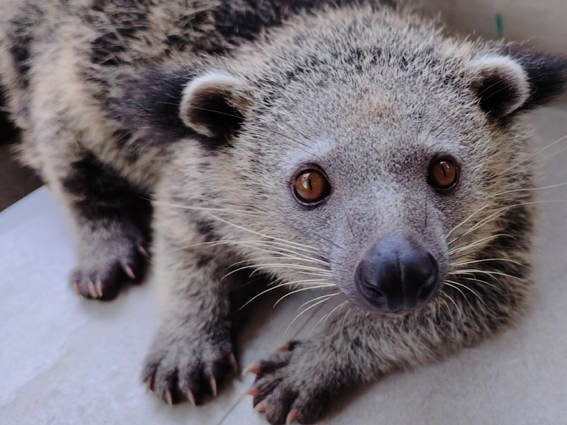
Who Are the Binturong ?
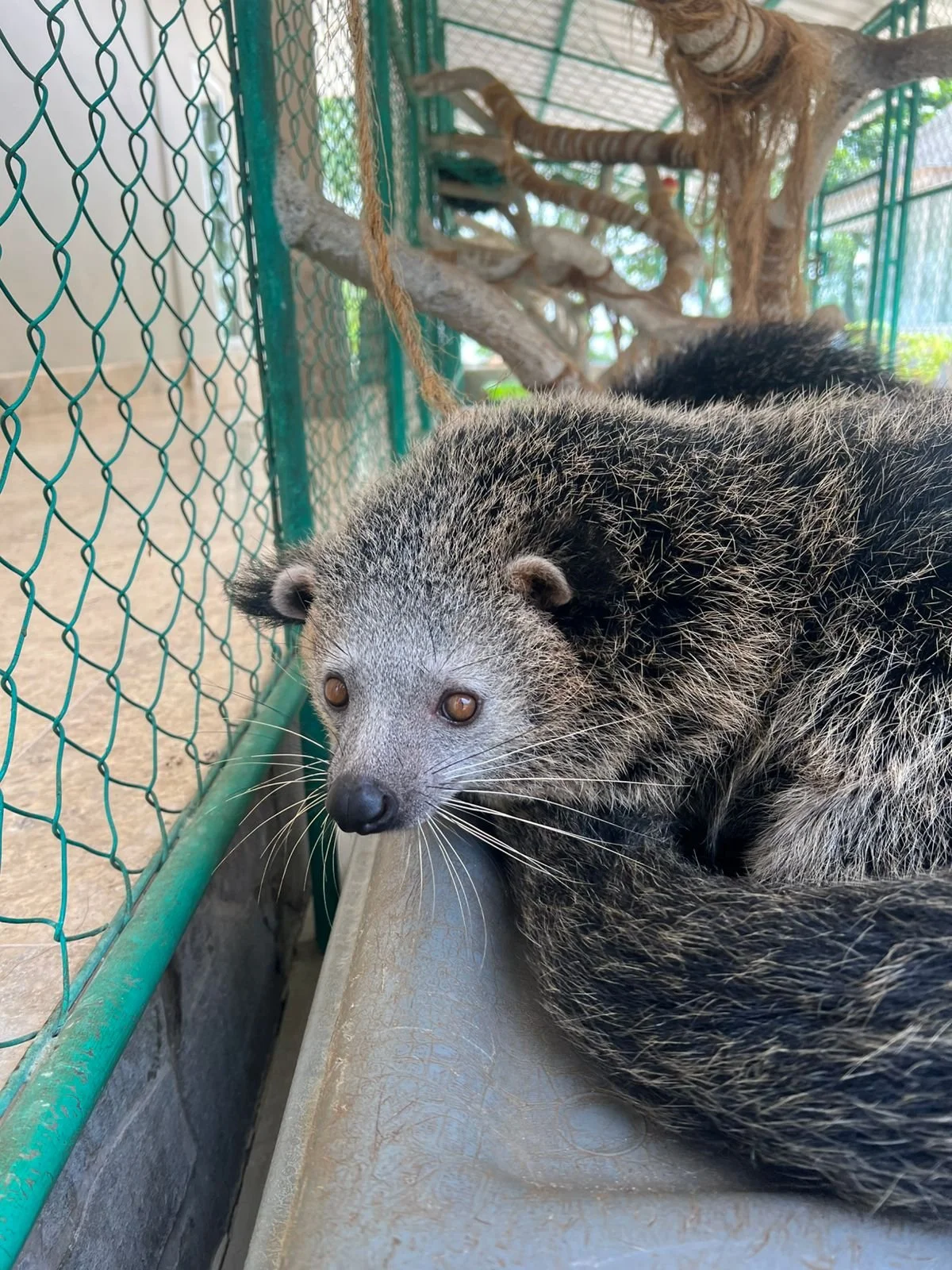
Meet Binturong : The Popcorn-Scented Climber of the Canopy
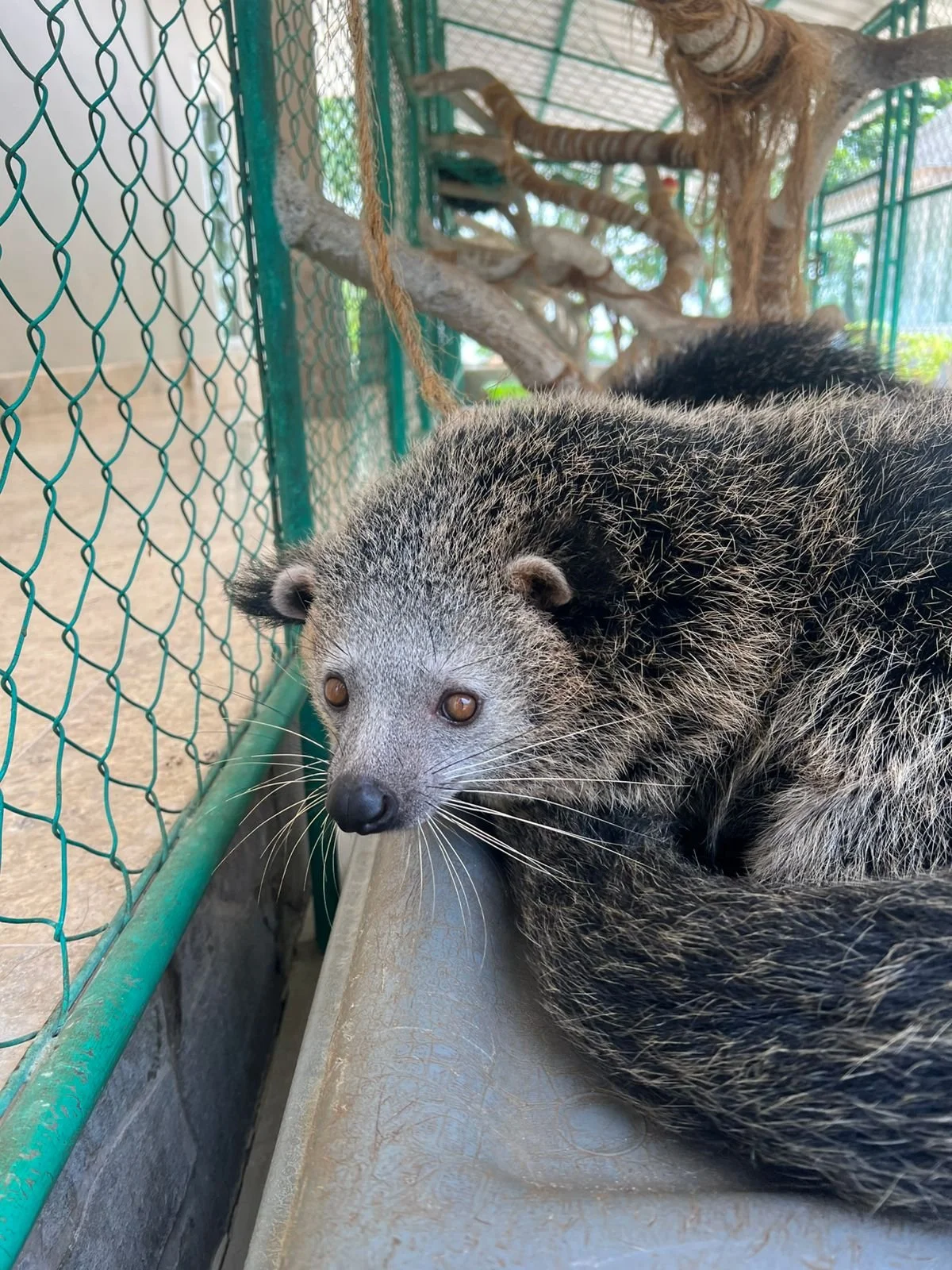
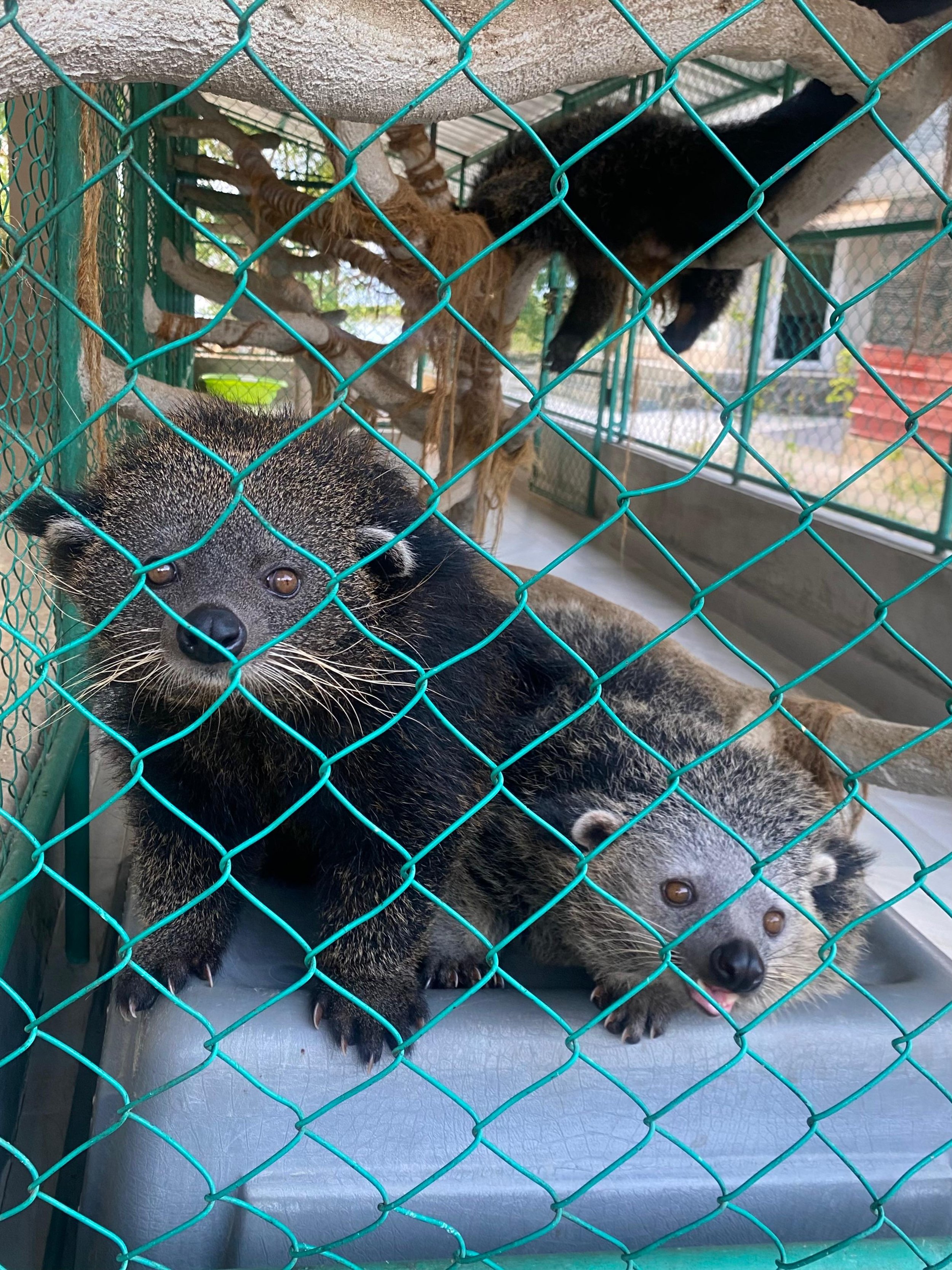
The binturong (Arctictis binturong) is one of Southeast Asia’s most unusual mammals—often called the “bearcat,” even though it’s neither a bear nor a cat. With its long, shaggy fur, whiskered face, and bushy tail, the binturong looks like it stepped out of a fairy tale. But its most surprising trait isn’t how it looks—it’s how it smells.
Many people say binturongs smell like buttered popcorn. This scent comes from a natural compound in their urine, which they use to mark trees and let other binturongs know whose territory it is.
Common Name: Binturong / Bearcat
Scientific Name: Arctictis binturong
Habitat: Tropical forests of Southeast Asia
Activity Pattern: Mostly nocturnal (active at night)
The binturong is classified as an omnivore, meaning it eats both plant and animal. Although it belongs to the carnivour family (Viverridae), its diet is actually dominated by fruit-especially figs. Along with fruit, binturong also eat leaves, insects, eggs, and small animals. This fruit-rich diet makes them important seed dispersers, helping forests regenerate and stay healthy.
Binturongs are mostly nocturnal and love life in the treetops. They even have a prehensile tail—one of the few carnivores in the world that can grip branches like a monkey.
Physical Traits
Body length: 60–95 cm (without tail)
Tail length: Almost as long as the body
Weight: 9–20 kg
Fur: Long, thick, and shaggy
Special feature: Prehensile tail (can grip branches)
Reproduction and Life Cycle
Pregnancy (Gestation period):
👉 About 90 days (≈ 3 months)Litter size:
👉 Usually 1–3 babies (called cubs)Birth:
👉 Cubs are born blind and helplessWeaning age:
👉 Around 6–8 weeksIndependence:
👉 Cubs start exploring at ~3 monthsSexual maturity:
👉 Around 2–3 years oldLifespan:
👉 18–25 years (can be longer in captivity
Conservation Status
The binturong is currently listed as Vulnerable on the IUCN Red List. It faces a high risk of extinction in the wild. Its population is declining mainly because of habitat loss, as tropical forests are cleared for agriculture,plantations, and development. Binturongs are also threatened by illegal wildlife trade, where they may be captured for pets, traditional medicine, or bushmeat. Because binturongs play an important role in spreading seeds and keeping forests healthy, protecting them also helps protect the entire forest ecosystem they depend on.