Who Are the Slow Lorrises ?
Meet Slow Loris: The Cute Primate with a Dangerous Secret
Common Name: Slow Loris
Scientific Name: Nycticebus spp.
Habitat: Tropical forests of Southeast Asia
Activity Pattern: Mostly nocturnal (active at night)
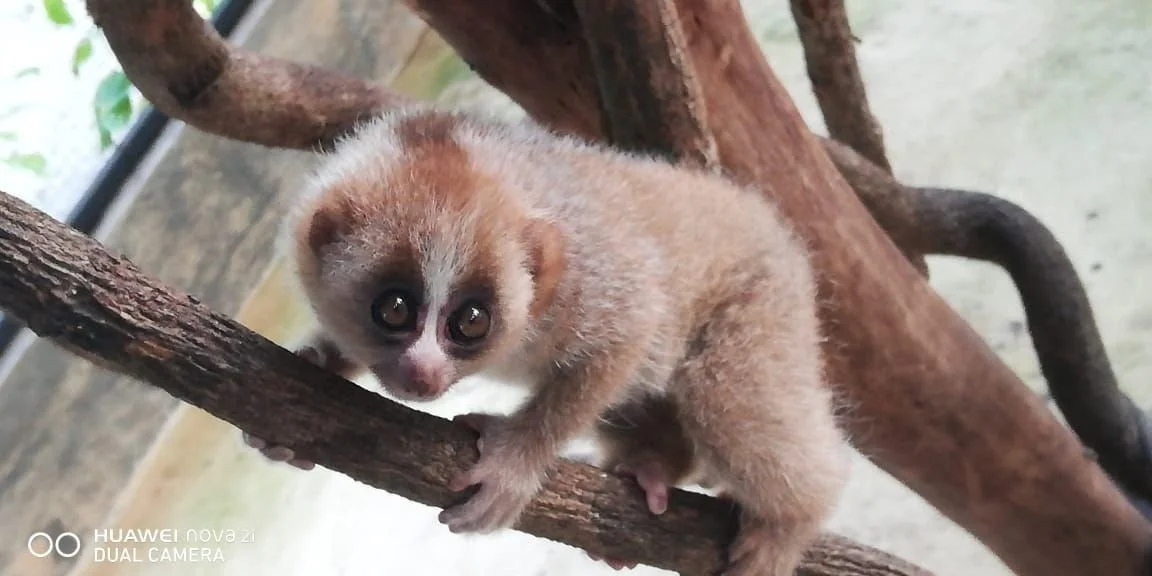
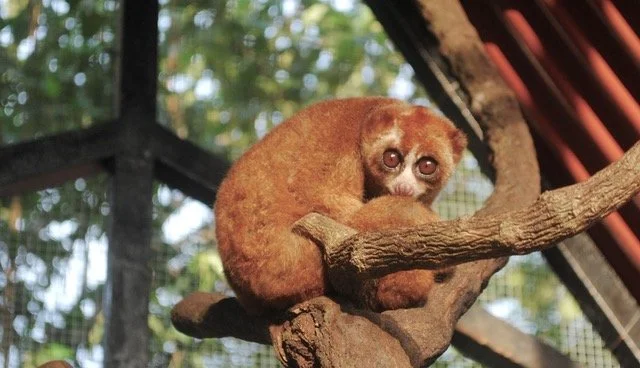
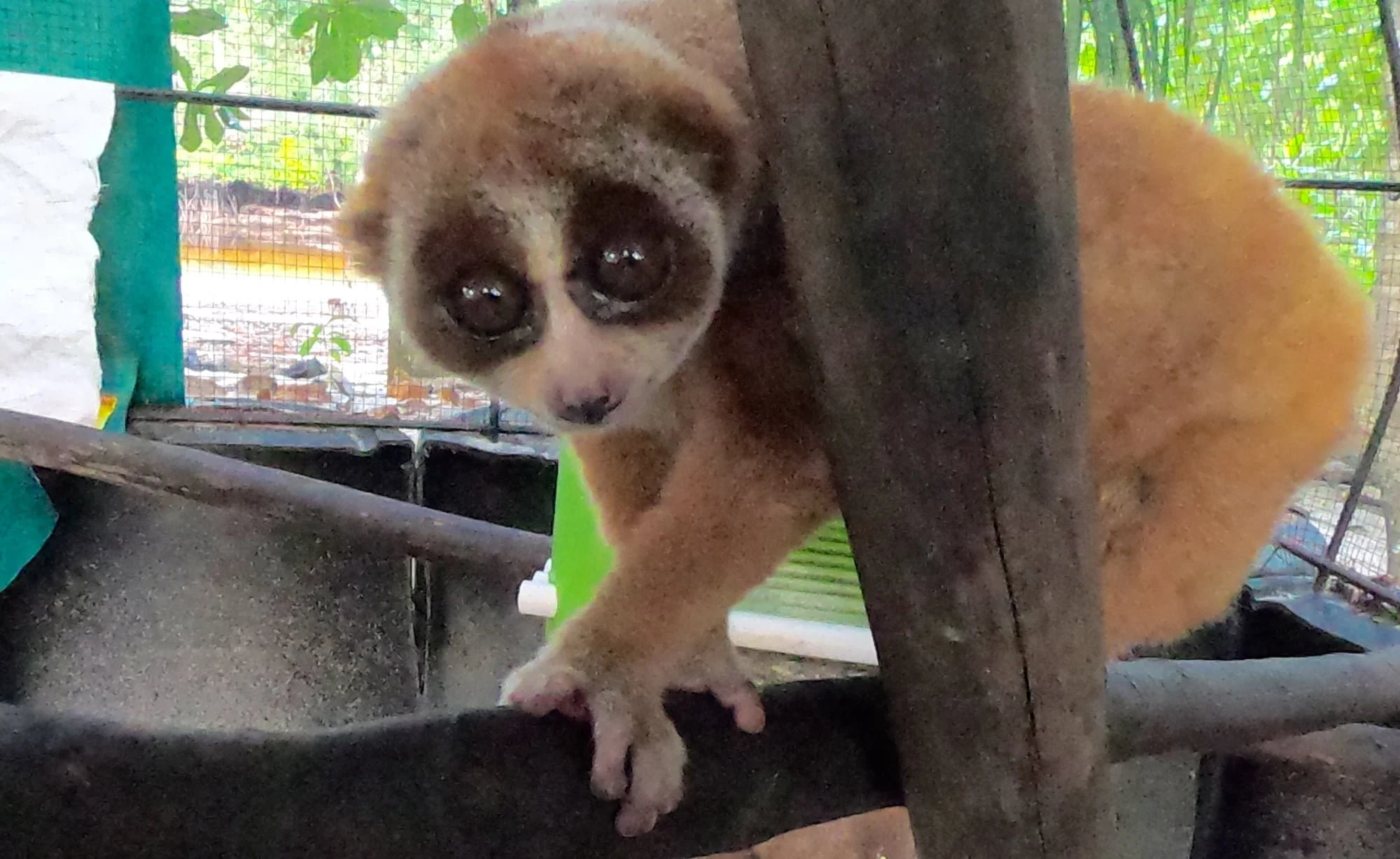
The slow loris (Nycticebus spp.) is a small, nocturnal primate that lives in the forests of Southeast Asia. With its round face, large shining eyes, and gentle movements, it looks cute and harmless. But behind this sweet appearance is one of the most surprising facts in the animal world—the slow loris is the only venomous primate on Earth.
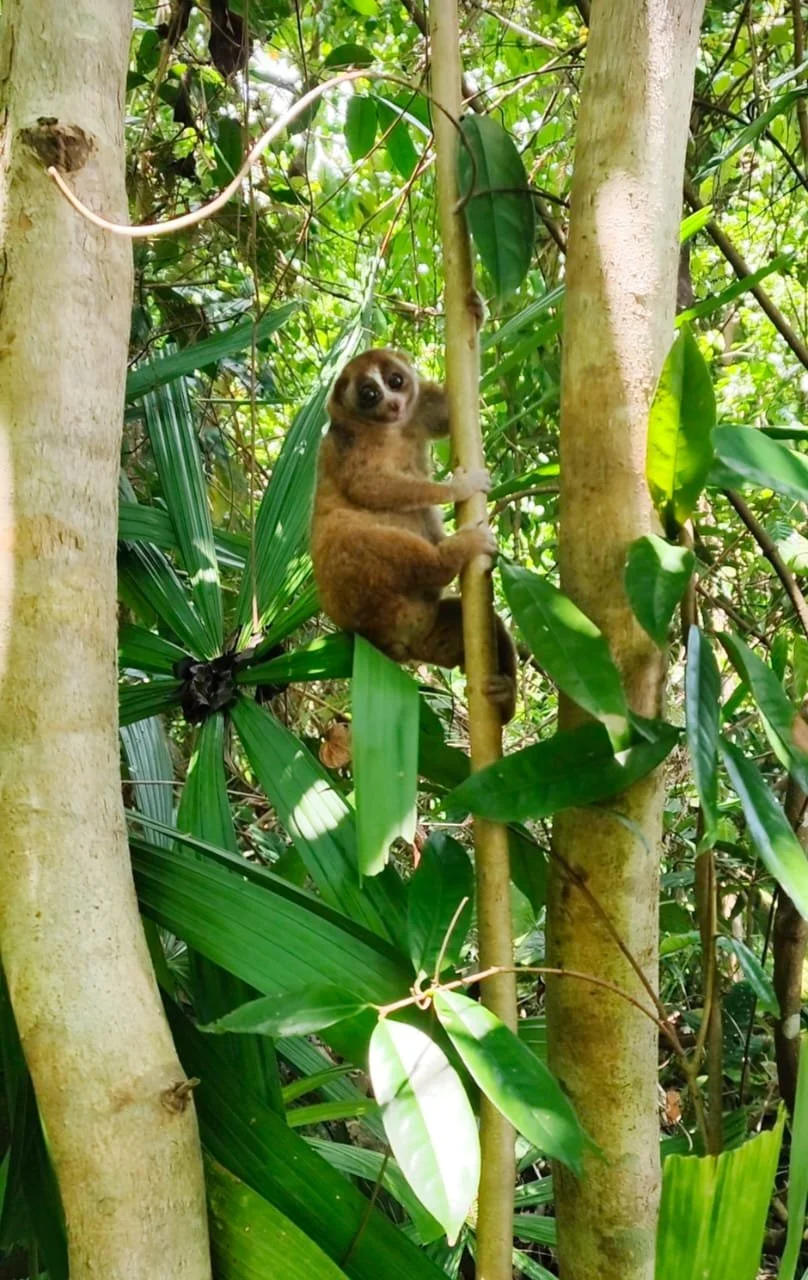
Slow lorises spend most of their lives in trees. They move carefully and quietly through branches at night, using their strong hands and feet to grip with incredible strength. Instead of jumping, they slowly reach from branch to branch, making them almost invisible in the dark forest. This slow and silent movement helps them avoid predators.
What truly makes the slow loris unique is its defense system. It has special glands on its arms that produce a toxin. When the loris feels threatened, it licks these glands and mixes the toxin with its saliva. If it bites, the venom can cause pain, swelling, and even serious allergic reactions in humans and predators.
Slow lorises live in tropical rainforests, bamboo forests, and even secondary forests near villages. They are found in Indonesia, Malaysia, Thailand, Vietnam, Cambodia, Laos, and parts of India. They usually live alone and only come together during mating season, spending most nights quietly searching for food.
Their diet includes tree gum, nectar, fruit, insects, and small animals. With sharp front teeth, they bite into tree bark to reach sap, which is one of their favorite foods. This feeding behavior also helps trees by spreading seeds and controlling insect populations in the forest.
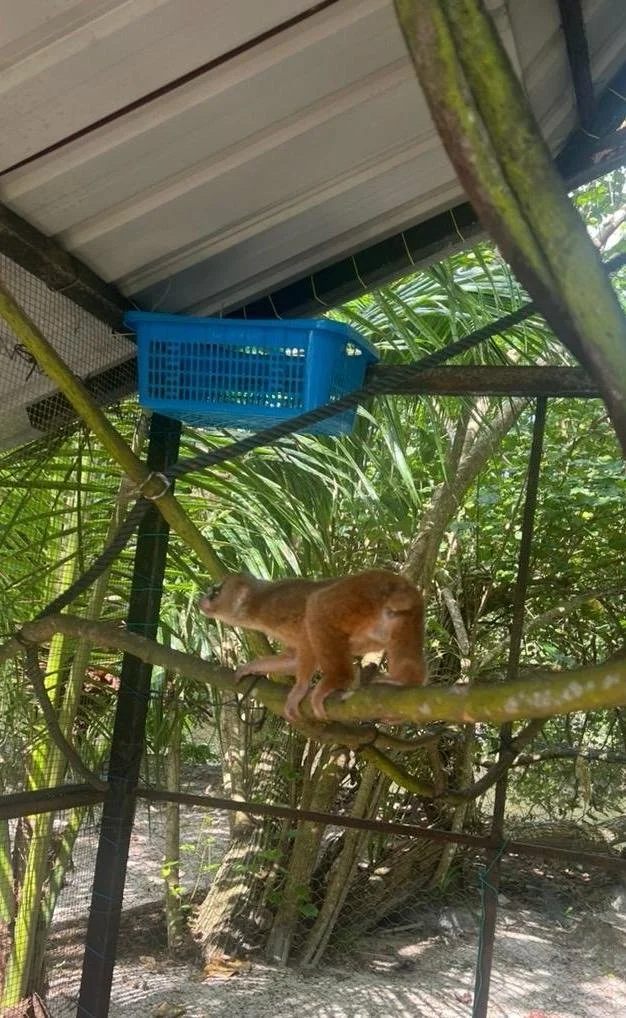
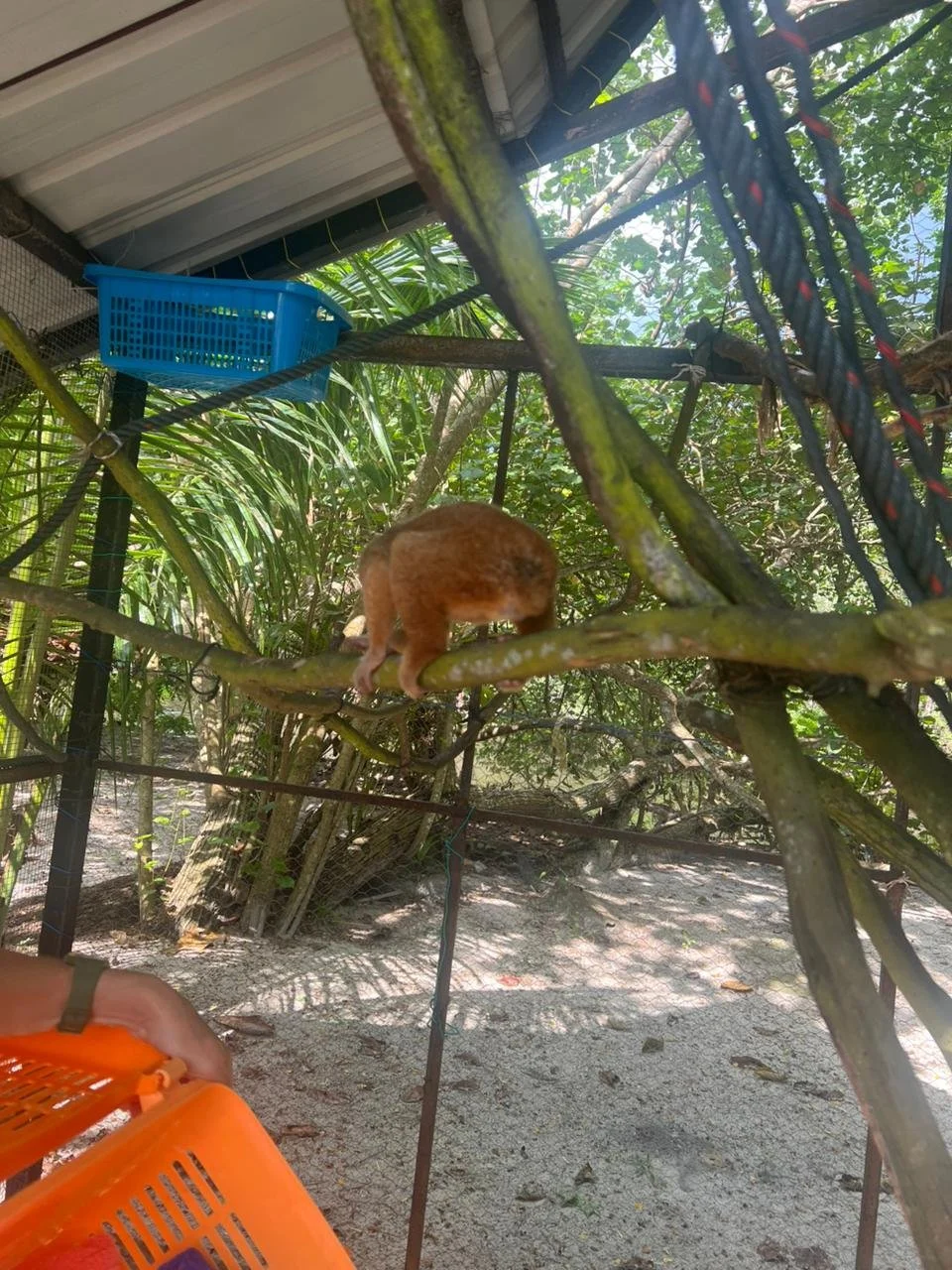
Sadly, slow lorises are under serious threat. Their cute appearance has made them popular in the illegal pet trade, and many are taken from the wild. Habitat loss from deforestation also reduces their homes. Today, all species of slow loris are protected, and conservation groups like ArkAsia work to rescue, rehabilitate, and return them to the wild where they belong.
Diet and Behaviour
Eats tree gum, nectar, fruit, insects, and small animals
Nocturnal (active at night)
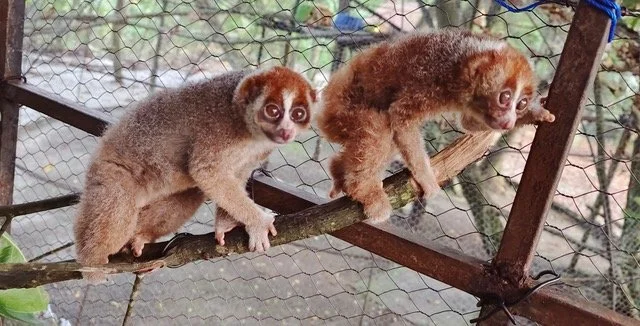
Solitary most of the time
Moves slowly and quietly to avoid predators
Reproduction and Life Cycle
Gestation: About 180–190 days (around 6 months)
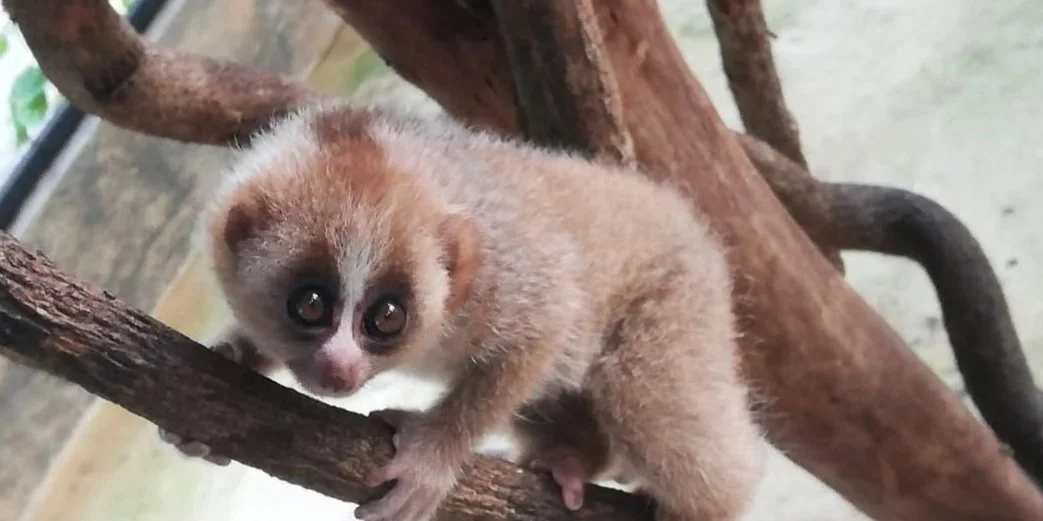
Litter size: Usually 1 baby
Birth: The mother carries the infant on her belly for the first weeks
Weaning: Around 4–6 months
Lifespan: Up to 15–20 years in the wild
Physical Traits
Body length: 18 - 35 cm (depending on species)
Tail length: very short or absent
Weight: 0,3 - 2.1 kg
Fur: Dense, soft, and woolly; color ranges from grey, brown, to reddish
Special feature:Venomous glands near the elbows (unique among primates)
All species of slow loris are now threatened in the wild. The main dangers they face come from illegal wildlife trade, habitat loss due to deforestation, and hunting. Because of their cute appearance, many lorises are captured and sold as pets. In the pet trade, their teeth are often cruelly removed so they cannot bite, which causes extreme pain, infection, and usually leads to death. Protecting forests and stopping the illegal trade are essential to saving slow lorises from extinction.
Conservation Status